

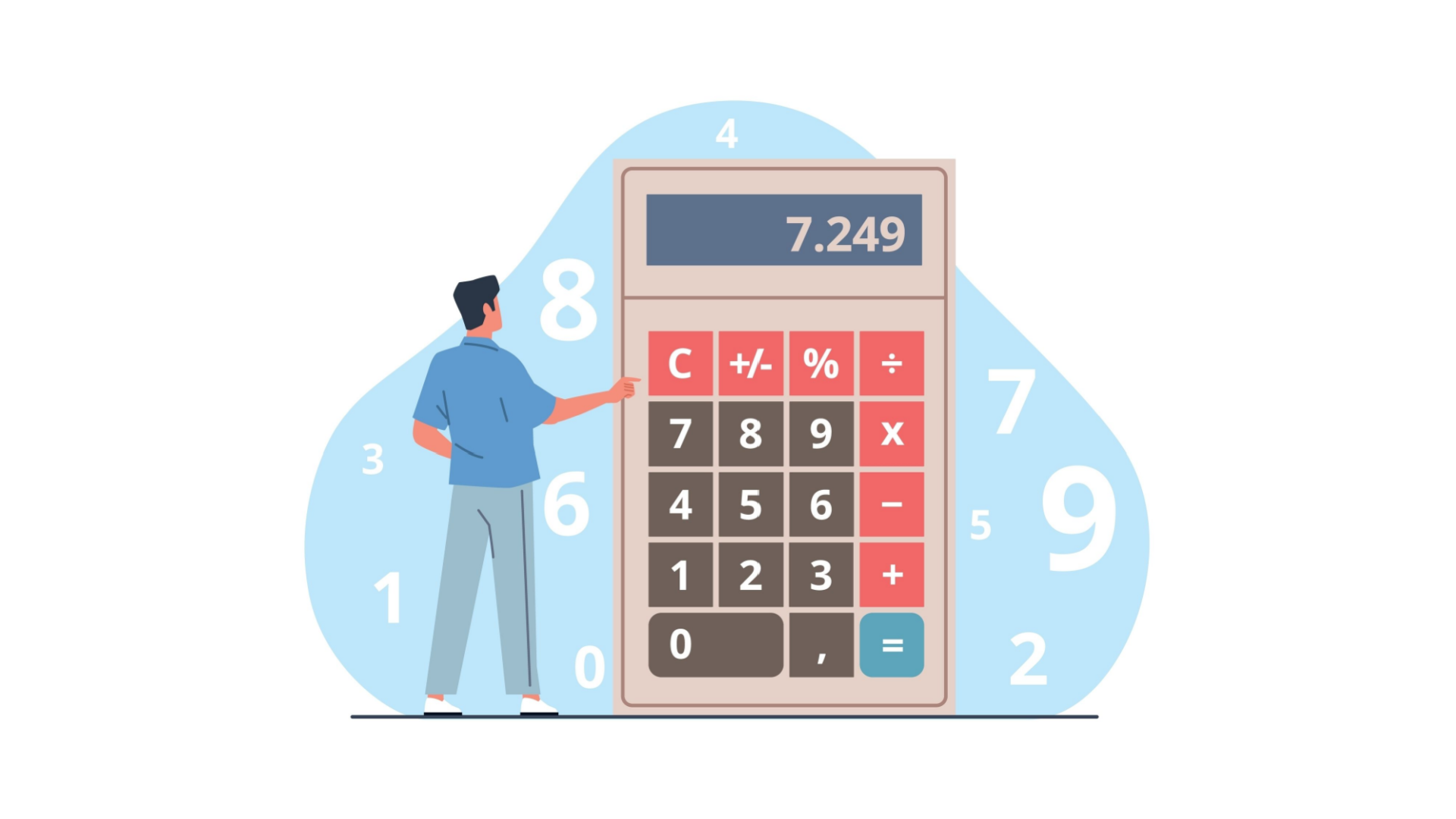
Navigating complex calculations is a daily task for many professionals and students, simplifying data analysis and problem-solving. Fortunately, accessing a versatile calculator online has become incredibly simple, offering immediate access without software installation. As technology evolves, the capabilities and integration of these digital tools are set to expand dramatically, shaping how we interact with numbers.
The Evolving Landscape of Calculator Online Services
The digital realm has transformed basic arithmetic tools into sophisticated platforms capable of handling intricate mathematical operations. These online calculators are no longer confined to simple addition and subtraction; they now offer advanced scientific, financial, and statistical functions readily available through a web browser. This accessibility democratizes complex computation, empowering users across various disciplines without requiring specialized software investment.
The trend towards cloud-based solutions means that users can access their calculation history, custom functions, and saved data from any device with an internet connection. Such features enhance productivity and offer a seamless workflow, distinguishing modern online calculators from their standalone desktop predecessors. This shift underscores a commitment to user convenience and data accessibility.
AI-Driven Enhancements for Calculator Online
Artificial intelligence is poised to revolutionize the functionality of online calculators, moving beyond mere computation to intelligent assistance. AI can interpret natural language queries, allowing users to describe problems conversationally rather than inputting precise formulas. This intuitive interaction lowers the barrier to entry for complex problem-solving, making advanced mathematics more approachable for a broader audience.
Furthermore, AI can analyze input data to suggest appropriate calculation methods, identify potential errors, and even offer insights derived from the results. Imagine a financial calculator that not only computes loan payments but also advises on optimal repayment strategies based on user-defined risk tolerance. This predictive and advisory capability represents a significant leap forward for digital calculation tools.
Personalization and Customization Features
Future online calculators will increasingly offer deep personalization options, adapting to individual user needs and workflows. Users will be able to create and save custom functions, tailor interfaces with preferred color schemes and layouts, and set default parameters for frequently used calculations. This bespoke approach ensures that the tool feels like an extension of the user’s own analytical process, rather than a generic utility.
- Customizable function libraries
- User-defined variable shortcuts
- Themable user interfaces
- Personalized calculation templates
- Adaptive learning for common inputs
This level of customization is crucial for specialized fields where unique formulas or iterative processes are common. By allowing users to craft their perfect calculation environment, online tools foster greater efficiency and reduce the time spent on repetitive setup tasks. The focus is on creating a truly bespoke digital assistant for numerical challenges.
Integration with Broader Digital Ecosystems
Online calculators are shedding their standalone identities to become integral components within larger software suites and platforms. Seamless integration with project management tools, spreadsheets, databases, and even virtual reality environments is becoming a key development area. This connectivity allows for real-time data exchange and collaborative work, breaking down silos between different digital applications.
| Platform | Calculator Integration Benefit | Use Case |
|---|---|---|
| Project Management | Budget forecasting, resource allocation calculation | Estimating project costs and timelines |
| E-commerce | Pricing calculators, discount calculators | Streamlining sales and customer offers |
| Educational Software | Interactive problem solvers, formula explorers | Enhancing learning through practical application |
This interconnectedness means that a calculation performed in one application can automatically update data in another, creating dynamic and responsive digital workflows. For instance, sales figures from a CRM could be fed directly into a financial calculator, providing instant performance metrics without manual data entry. Such integrations promise to unlock new levels of operational efficiency and data-driven decision-making.
Augmented Reality and Spatial Computing
The advent of augmented reality (AR) and spatial computing heralds a new frontier for how we interact with calculation tools. Imagine overlaying complex geometric calculations directly onto a physical object in AR, or using voice commands to perform calculations in a 3D environment. This spatial dimension transforms abstract numbers into tangible, interactive elements within our physical space.
AR-enabled calculators could assist architects in visualizing structural loads on buildings, engineers in performing real-time measurements on-site, or students in understanding complex 3D geometry. This immersive approach moves beyond traditional screen-based interfaces, offering a more intuitive and contextually relevant way to engage with mathematical concepts and problem-solving. Such advancements position online calculators at the forefront of emerging technological paradigms.
Enhanced Security and Privacy Measures
As online calculators handle increasingly sensitive data, robust security and privacy features are paramount for their future development. Users need assurance that their financial calculations, proprietary formulas, and personal data are protected from unauthorized access and misuse. Encryption, secure authentication protocols, and transparent data handling policies will become standard expectations.
The trend towards privacy-preserving computation, such as federated learning or homomorphic encryption, may also find applications in advanced online calculators. These technologies allow computations to be performed on encrypted data without decrypting it, safeguarding sensitive information. Building user trust through demonstrable security measures will be critical for the widespread adoption of sophisticated online calculation services.